Corporate sustainability in 2026 is facing its most demanding test of institutional maturity. Gone are the days when environmental pledges were confined to glossy marketing reports featuring ambiguous aspirations for 2050. Global capital markets, banking regulators, and international supply chains have transformed ESG into a discipline of rigorous accounting audits and fiduciary governance.
Key regulatory milestones—notably the enforcement of the IFRS S1 and S2 standards by the International Sustainability Standards Board (ISSB) and the operational roll-out of regulated emission trading systems—mean climate resilience now directly determines balance-sheet solvency, debt pricing, and foreign direct investment appeal.
💡 Key Takeaways
- Audited Climate Disclosures: ESG data is subject to the same accounting rigor as financial earnings under universal IFRS S1 and S2 frameworks.
- Cost of Capital at Stake: Enterprises failing to quantify climate exposures face elevated loan spreads and diminished liquidity from institutional funds.
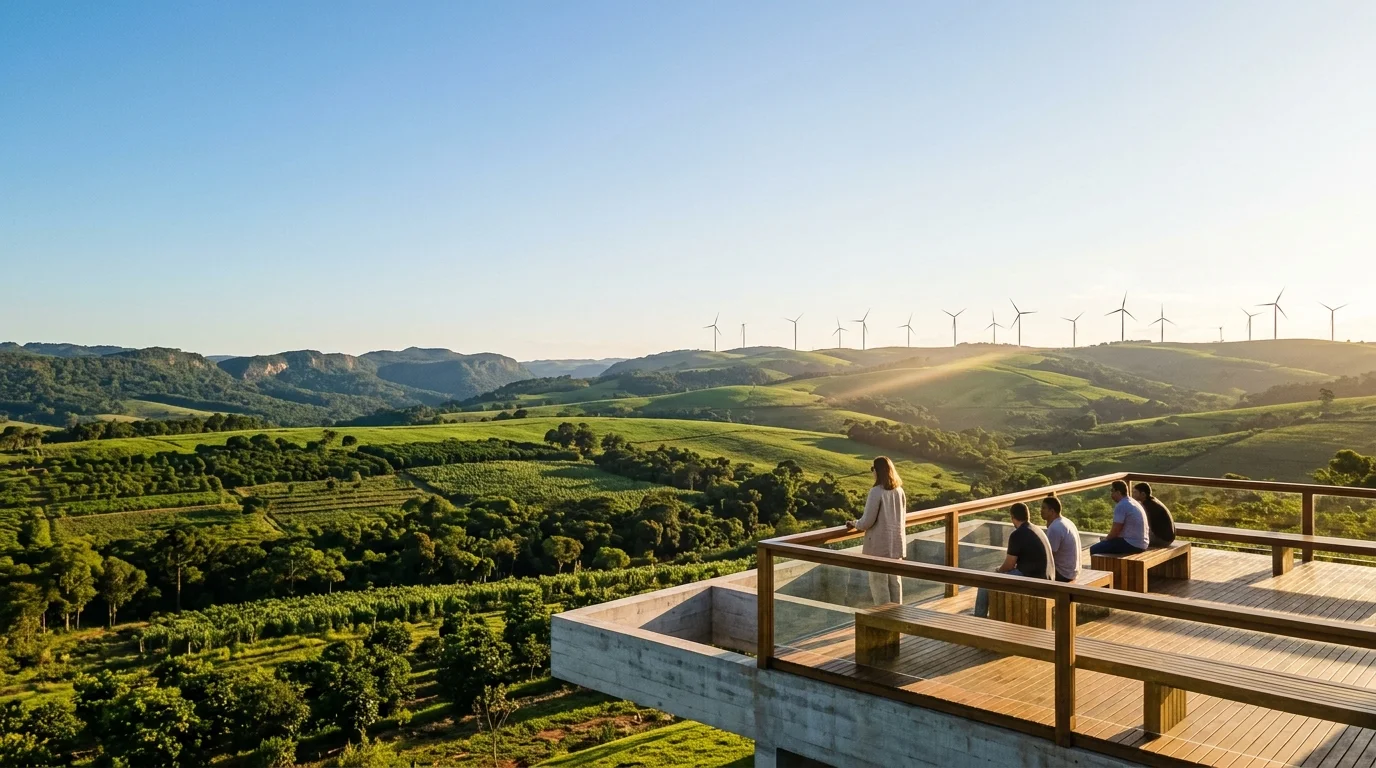
- Brazil’s Clean Advantage: With over 88% renewable power on its electrical grid and vast tropical land for agroforestry, Brazil anchors high-integrity carbon credits worldwide.
1. IFRS S1 & S2: When Climate Risk Hits Financial Ledgers
Until recently, sustainability metrics lived in isolation from mainstream financial statements. The adoption of ISSB standards permanently binds environmental data to balance-sheet health:
- IFRS S1 (General Sustainability Disclosures): Mandates clear reporting on how governance structures assess environmental risks and strategic value over short, medium, and long horizons.
- IFRS S2 (Climate-Specific Requirements): Requires full quantification of Scope 1, 2, and 3 emissions (spanning upstream supply chains and downstream logistics), complemented by extreme climate scenario stress tests.
For investment committees and tier-one lenders, these metrics act as primary gatekeepers: carbon-conscious organizations issue green bonds with favorable interest rate margins, whereas laggards face steep capital penalties.
2. High-Integrity Carbon Markets and Clean Energy Transitions
As national emission trading schemes mature, corporate leaders are prioritizing high-integrity carbon offsets:
- Regenerative Agriculture & Soil Sequestration: Satellite verified carbon retention in biological ecosystems.
- Native Reforestation: Combining deep atmospheric carbon capture with biodiversity corridors.
- Grid Storage and Battery Integration: Managing intermittency in expanding solar and wind corridors.
Learn more about carbon pricing dynamics in Brazil in our full market report.
💬 Frequently Asked Questions (FAQ)
What are IFRS S1 and IFRS S2 standards?
They are global disclosure standards created by the ISSB to ensure corporate sustainability (S1) and climate-related financial risks (S2) are reported with verifiable consistency across international capital markets.
How do global carbon audits impact medium-sized enterprises?
Even if mid-market companies are below statutory compliance thresholds, multinational customers demand verified Scope 3 carbon audits to maintain commercial vendor contracts.
Why is Latin America a strategic hub for high-integrity carbon?
With naturally clean electricity grids and vast terrestrial biomes, the region delivers bio-sequestration projects with verifiable permanence and strong biodiversity co-benefits.
🔗 References & Primary Sources:
- Reset UOL — Sustainable finance and carbon market reporting.
- Exame ESG — Corporate transition strategy and clean energy frameworks.
- Securities & Exchange Commission of Brazil (CVM) — Regulatory standards on sustainability disclosure.
Is your organization tracking its Scope 3 footprint or preparing for audited ESG reporting? Share your perspectives in the comments!
Position Your Enterprise at the Forefront of the Carbon Economy
ENSUC supports organizations from baseline emissions inventories through the structuring and monetization of high-integrity carbon credits.
- Credit Estimation: Model volume scenarios with the ENSUC Carbon Simulator.
- Sustainable Capital: Review green financing instruments at Climate Finance.
- Corporate Advisory: Connect with our carbon markets advisory team at /#contato.
International Editions
This technical ENSUC report is available in multiple languages for global partners and investors: